What's your risk appetite for other people?

Somebody called me gullible when I was about fifteen. He was a friend, he meant it as a warning, and he was right. I'd been had again, in a small way, by someone we both knew. What I remember is not minding as much as he thought I should.
I moved between groups at school more than most people did. The sporty ones, the nerdy ones, the ones the teachers had written off, the canteen staff, the teachers. Each was a person, each had a perspective, and I could learn something from each of them. The cost of standing in that position is that you make yourself available, and some proportion of the people who find you available are looking for exactly that. I've been lied to, used and occasionally robbed, in various ways, by people I had decided to see the best in.
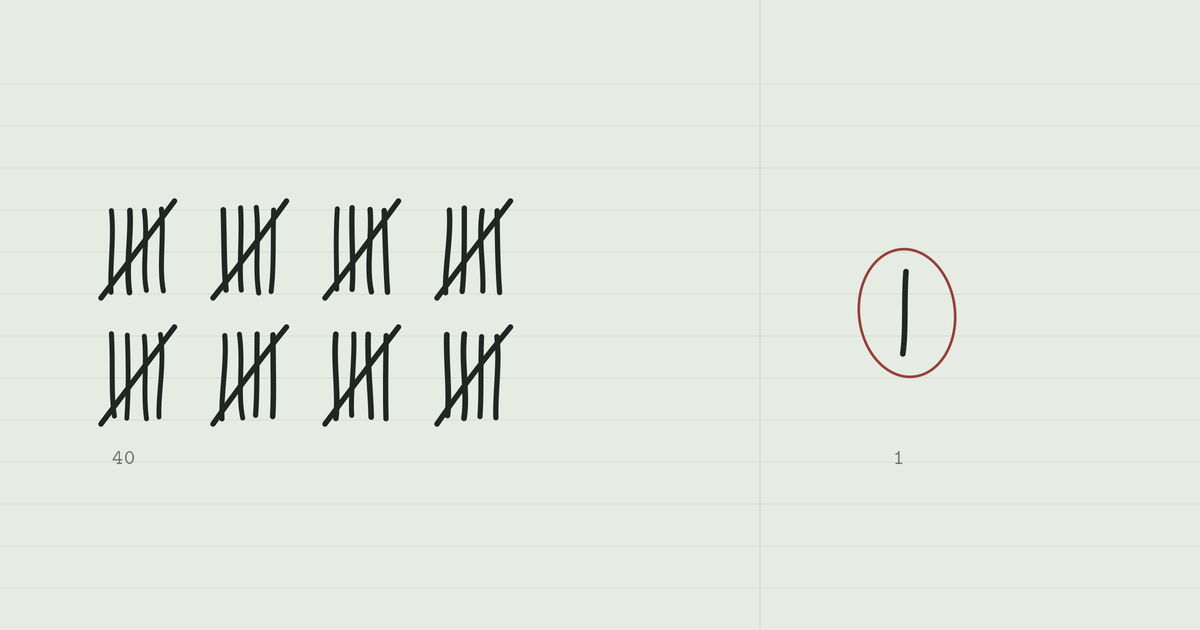
What I concluded then, and still hold now, is that I would accept tens of exploitations in exchange for finding one sincere person. I had an image of myself lying on the floor, waiting to see who steps over me, who steps on me, who steps around me, and who helps me up. Guarding myself properly would take the exploitations close to zero. It would also take finding sincere people close to zero, because the same behaviour enables me to find both.
You could call that a character flaw dressed up as a principle, and it might be. It is also a risk appetite, and I want to use the term precisely rather than decoratively, because it is the one piece of my professional vocabulary that transplants without distortion. The alternative to total exposure is not necessarily total closure; some risks can be limited while the relationship is still being tested.
Firms state theirs
An insurer writes a risk appetite statement. It is a board-approved document setting out, in advance and in both words and numbers, how much loss the firm is willing to absorb and in pursuit of what. It is not a thrilling read. Writing it down doesn't prevent the losses; what it does is force the decision to be made in advance, in the cold, rather than in the aftermath, like when a large claim has just landed and everyone in the room has feelings about it.
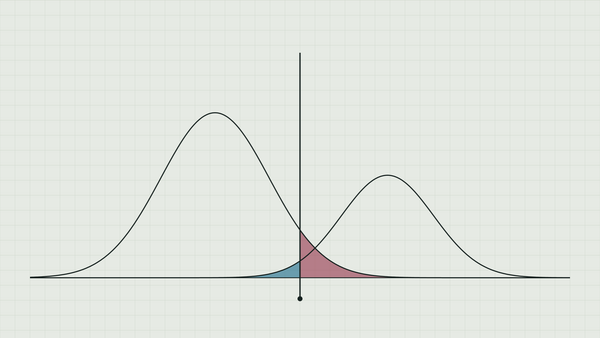
Dan Davies puts the general version of this better than I can in Lying for Money: fraud is an equilibrium quantity. You can't check everything and you can't check nothing, so an economy decides how much effort to spend checking, and that decision determines how much fraud there is. Patrick McKenzie later made the same point about payments businesses and in passing turned it into the question I think it actually is - how much do you trust people, and under what circumstances - before returning to card networks.
Almost nobody answers that question about their own life. There is an enormous literature on who to trust, how to build trust and how to repair it, and I have read a reasonable amount of it. What I have not found anywhere is a person stating a number: how many betrayals they have decided in advance to absorb, and what they believe they are buying with them.
Appetite is not capacity
There is a condition attached, and it is the part I had wrong for years.
Appetite is how much loss you are willing to accept in pursuit of certain goals. Capacity is how much you can absorb before something structural gives way. A firm that states an appetite exceeding its capacity is not bold; it is insolvent on a delay. The statement is worthless unless the second number is the binding one.
Applied to people, this means an open posture is only defensible if you can absorb the losses it produces. For a long time I couldn't, and didn't notice, because the losses arrived slowly and I attributed the damage to other things. Exposure had been mistaken for generosity.
That is a common enough error that I suspect it is what most people are actually objecting to when they call somebody gullible. The same behaviour gets called gullible by one person and generous by another, and neither of them is looking at the number.
The numbers moved
Becoming a husband and then a father changed both figures sharply, and in opposite directions.
What I can bear from the world outside my family has fallen materially. There are now people whose exposure is downstream of mine, and a loss I would once have absorbed as tuition is now a loss they take too. What I can bear from inside the family has risen by roughly the same amount, possibly more. Same person, same disposition, entirely different balance sheet. This suggests the appetite was never really a fact about my character, though I had been treating it as one.
What this doesn't establish
Two things, and they are not small.
The first is whether any of it has worked. I can count the exploitations, because they announce themselves. I cannot count the sincere people I found, because I cannot observe the version of my life in which I was careful and met them anyway. There is no counterfactual and therefore no causal verdict. Anyone who tells you their approach to trust has been vindicated is reporting on a sample they selected.
The second is whether my appetite is calibration or simply a lower sensitivity to the cost. Bohnet and Zeckhauser ran a trust game against a structurally identical gamble in which nature, rather than a person, determined the outcome. People required a better probability before trusting the person than before taking the same odds from nature: a premium charged specifically for the possibility of betrayal. Bohnet and colleagues found the same pattern across six countries a few years later. If most people price betrayal above equivalent bad luck, then either I have priced it correctly and they haven't, or I feel it less, which is a different thing entirely and not obviously a virtue.
Rachel Botsman would reject the frame at the outset. She defines trust as a confident relationship with the unknown, and objects to risk-assessment definitions on the grounds that they make trust sound rational and predictable when it is neither. I think she has identified something real and drawn the wrong conclusion from it: pricing a risk has never required the risk to be predictable, which is precisely why the pricing is difficult. Though I would think that.
So it's not whether you trust people. Everyone says they do.
It's how many you are willing to let take something from you before you would decide the search wasn't worth it. Have you ever put a figure on it? And if you haven't, when the loss arrives, who is going to be setting the number? You or the loss?
References
I Bohnet and R Zeckhauser, 'Trust, risk and betrayal', Journal of Economic Behavior & Organization 55(4), 2004, 467–484.
I Bohnet, F Greig, B Herrmann and R Zeckhauser, 'Betrayal aversion: evidence from Brazil, China, Oman, Switzerland, Turkey, and the United States', American Economic Review 98(1), 2008.
D Davies, Lying for Money, Profile Books, 2018.
P McKenzie, 'The optimal amount of fraud is non-zero', Bits about Money, 2022.
R Botsman, Who Can You Trust?, Portfolio Penguin, 2017.